Permanent Dentures: What They Are and How They Work

Permanent dentures are a full arch of replacement teeth fixed onto dental implants, so they stay in your mouth instead of coming out at night. In Fort Worth, the most common version is All-on-4, where four implants hold a complete upper or lower set of teeth. They suit adults missing most or all of their teeth.
What “Permanent” Really Means for Your Smile
- Permanent dentures are fixed to implants and are not removed at home, unlike traditional dentures.
- All-on-4 uses four strategically placed implants to hold a full arch of teeth.
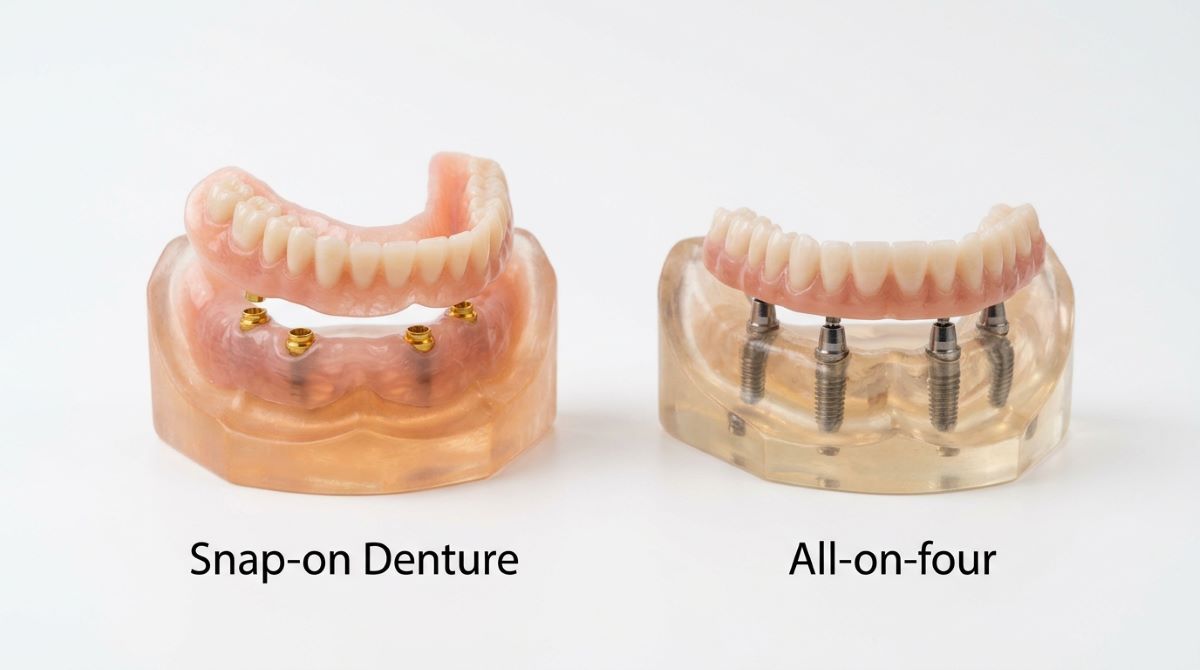
- They are not the same as snap-on dentures, which attach to implants but come out daily for cleaning.
- Long-term, not maintenance-free: the implants and teeth need regular follow-up, and the teeth may need repair over time.
- Cost and suitability are confirmed with imaging and a clinical exam before treatment.
“Permanent” is a patient term, not a clinical one, and it is used to describe several different treatments online. This guide explains what the term usually means, how the treatment works step by step, and how it compares with other options, so you can talk about it confidently at your consultation in north Fort Worth.
What Are Permanent Dentures?
They are implant-supported teeth that are attached to the implants and are not taken out at home. Day to day they stay in place, much like natural teeth.
The clinical name for the most common version is a fixed full-arch implant prosthesis. At Covenant Dental, this is offered as All-on-4 dental implants in Fort Worth: a full-arch tooth replacement using four strategically placed implants, designed as a non-removable alternative to dentures.
Why They Are Called “Permanent”
The word “permanent” describes how the teeth are worn, not how long they last. Traditional dentures rest on the gums, and some are removed at night for tissue health. Implant-fixed teeth are attached to implants, which helps prevent slipping and clicking without adhesives, and they are not taken out to sleep.
How Do Permanent Dentures Work?
They work by using dental implants as artificial tooth roots. According to the American Dental Association, implants are posts placed in the upper or lower jaw that act as a sturdy anchor for replacement teeth, and when more than a single tooth is replaced, custom-made bridges or dentures are made to fit your mouth and your implants.
The Role of Osseointegration
After the implants are placed, the jawbone grows around them and holds them in place. This bonding process is called osseointegration, and it takes time. Once it is complete, the implants can support the attached teeth for chewing.
Why Four Implants Can Hold a Full Arch
All-on-4 places four implants in strategic positions in the jaw. This lets a full set of teeth be supported by fewer implants than replacing every tooth one by one, and it is designed to reduce the need for extensive bone grafting.
The Permanent Denture Process Step by Step
At Covenant Dental, All-on-4 treatment moves through clear stages, and each step is explained before it begins:
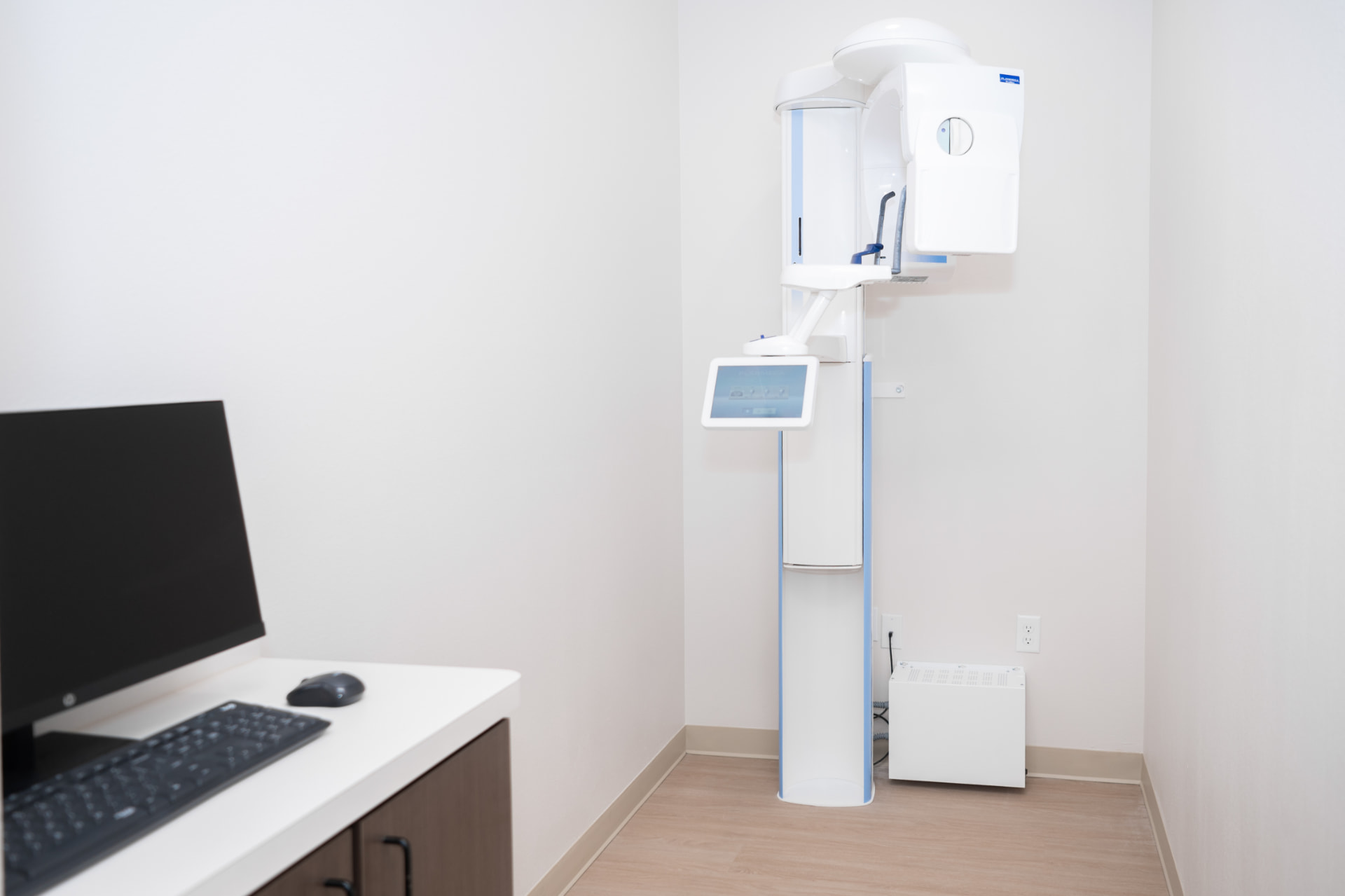
- Initial consultation and diagnostic imaging to assess your bone and suitability
- Implant placement surgery, under local numbing or with sedation for adults when appropriate
- Temporary teeth placement, when appropriate, to help while you heal
- Healing and integration phase, while the bone bonds to the implants
- Final prosthetic placement after healing
If you still have teeth that cannot be saved, they are evaluated as part of your plan. If your jawbone needs support, a graft may be discussed first. Our guide to full mouth dental implants explains how bone and budget shape each option.
Permanent Dentures vs. Snap-On Dentures vs. Traditional Dentures
Patients often confuse fixed implant teeth with snap-on dentures, because both use implants. The key difference is whether the teeth come out.
| Feature | Traditional dentures | Snap-on dentures | Fixed full arch (All-on-4) |
|---|---|---|---|
| Held by | Gums and adhesives | 2 to 4 implants per arch | Four implants per arch |
| Removed at home | Yes, daily | Yes, daily | No |
| Slipping or clicking | Can happen | Prevented by implant attachments | Fixed in place |
| Cleaning | Out of the mouth | Out of the mouth | In the mouth |
Implant-supported dentures is a broad term that covers both snap-on dentures and fixed full-arch teeth. If you prefer a removable option that still clicks securely onto implants, see snap-on dentures in Fort Worth.
When Traditional Dentures May Still Fit Better
Traditional removable dentures do not require implant surgery and cost less. For some patients, they are the right choice. Covenant Dental offers full and partial dentures in Fort Worth and explains their limitations honestly, including that bone changes over time can affect the fit.
Who Is a Good Candidate for a Fixed Full Arch?
This treatment is designed for patients missing most or all of their teeth. Suitability is assessed through imaging and a clinical evaluation, because the treatment is a surgical procedure with healing requirements and is not suitable for every patient.
You may be a good candidate if you:
- Are missing most or all teeth in one or both arches
- Are tired of loose dentures, adhesives, or sore spots
- Want teeth that stay in and feel stable when you eat and speak
- Are healthy enough to heal after implant surgery
According to the ADA, chronic illnesses such as diabetes may interfere with healing after surgery, and tobacco use can slow healing. Your medical history is reviewed before any implant treatment.
Living With Implant-Fixed Teeth
Because the teeth stay in, daily care looks more like caring for natural teeth than caring for a removable denture.
- Brush the teeth and the gumline around the implants every day
- Clean carefully under and around the bridge, following the care instructions you receive
- Keep regular dental follow-up visits, which are essential over the long term
- Report any chips, looseness, or sore areas early
The implants and prosthetic teeth are both expected to last long-term, and longevity depends on your oral hygiene and health habits. Maintenance is required over time, and the prosthetic teeth may need wear repairs or replacement.
What Does a Fixed Full Arch Cost?
Permanent dentures cost more than removable dentures because they include implant surgery and a custom full-arch prosthesis. At Covenant Dental, All-on-4 has a cost range of $15,000 to $20,000 per arch. Final pricing varies based on your individual clinical needs. The cost varies based on complexity and materials.
For comparison, traditional complete dentures have a cost range of $815 to $2,300 per arch. Final pricing varies based on your individual clinical needs.
- Insurance coverage is reviewed for your plan
- Financing or phased treatment is discussed when available
- The adult and gum disease membership plans include 25% off dental implants
FAQs About Implant-Fixed Teeth
Wondering If Fixed Implant Teeth Are Right for You?
If loose dentures are holding you back, the first step is finding out whether your bone can support implants. At Covenant Dental in north Fort Worth, close to Keller, Haslet, and Saginaw, your options are compared clearly before you commit.
- Diagnostic imaging to assess your bone and suitability for All-on-4
- Temporary teeth when appropriate, to help while you heal
- 25% off dental implants with the adult and gum disease membership plans
Call us to book your consultation.
Covenant Dental, 512 W Bonds Ranch Rd, Suite 100, Fort Worth, TX 76131