Dental Bone Graft Healing Stages Before Implants
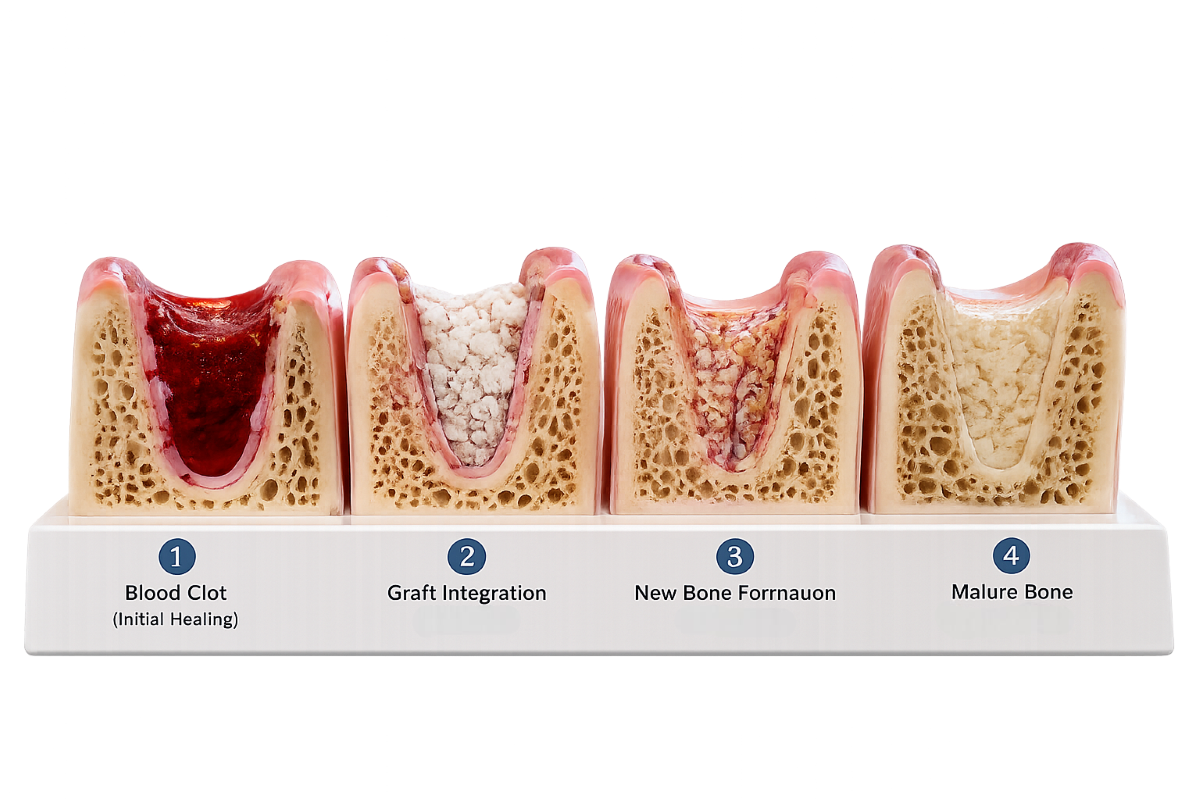
Dental bone graft healing stages describe how a graft becomes solid bone that can hold an implant. In general, a blood clot forms first, the gums close over the site within weeks, and new bone grows through the graft over months. At Covenant Dental in Fort Worth, a graft usually heals for about 3 to 4 months before an implant.
From Graft to Implant-Ready Bone
- Healing happens in stages: a protective clot, gum closure, new bone growth, and final maturation.
- About 3 to 4 months is the usual healing time at Covenant Dental before implant placement.
- Mild soreness and swelling are common in the first days and can usually be managed with over-the-counter pain relief.
- A barrier membrane protects the graft while it heals.
- Follow-up visits monitor healing and confirm when you are ready for the implant.
- A bone graft is often the step that makes a future implant possible, but the waiting period can feel long when you cannot see what is happening under the gums. This guide walks through each stage of healing, what is normal, and what to ask your dentist.
- That way, the months between your graft and your implant in north Fort Worth feel more predictable.
Why a Bone Graft Needs Time to Heal
A graft rebuilds jawbone that has been lost after missing teeth, gum disease, injury, or long-term denture use. The graft material acts as a framework, and your body gradually grows new bone into it. That process cannot be rushed, because an implant needs solid bone around it to stay stable.
According to the American Dental Association, after an implant is placed the bone grows around it and holds it in place, a process that takes time. A graft gives that bone a strong foundation first. To see where grafting fits in a full treatment plan, read our guide to full mouth dental implants.
What Happens During the Graft Itself
At Covenant Dental, a bone graft usually takes about 1 hour and is done under local anesthesia, with sedation options available for adults. The graft material is the highest quality human-donated bone, and a barrier membrane is placed to protect the graft and support healing. Learn more about the procedure on our dental bone graft in Fort Worth page.
Dental Bone Graft Healing Stages Week by Week
Every patient heals at a slightly different pace, and the type and size of the graft matter. The stages below describe the general dental bone graft healing process that most patients move through.
Stage 1: The First 24 to 72 Hours
The first stage is about protecting the site. A blood clot forms over the graft, and this clot is the start of all healing. The ADA notes that when a clot is displaced after an extraction, bone and nerves can be left exposed, which is why the early days call for gentle care.
During this stage, it is normal to notice:
- Mild soreness and swelling
- Slight oozing for the first day
- Tenderness when touching the area
Stage 2: Days 3 to 14
Swelling usually peaks in the first few days and then begins to ease. Patients often search for day 4 dental bone graft healing stages because this is when they wonder whether what they see is normal. Around this time, soreness should be settling rather than getting worse.
The gum tissue starts closing over the graft during these weeks. You may notice small granules of graft material near the surface, which can be part of normal healing. Your post-treatment instructions, including diet and activity guidelines, are most important during this stage.
Stage 3: Weeks 2 to 8
Once the gums have closed, healing moves below the surface. Your body begins forming new bone that grows into the graft material. Most patients feel back to normal by now, even though the graft is still developing.
Stage 4: Months 2 to 4
This is the maturation stage, when the new bone becomes denser and stronger. At Covenant Dental, the graft usually heals for about 3 to 4 months before implant placement. Larger grafts may need longer, while small grafts may sometimes be done alongside implant placement.
Stage 5: Confirming Your Bone Is Ready
The final step is checking that the bone is ready. Follow-up visits monitor healing and confirm readiness for implants. Then your dental implants in Fort Worth can be planned and placed.
What to Expect After a Dental Bone Graft
Knowing what to expect after dental bone graft surgery helps you spot the difference between normal healing and something worth a call. In general:
- Soreness and swelling are common at first and usually improve each day
- Over-the-counter pain relief is usually enough to manage discomfort
- Soft foods are easier on the site in the early days
- The area should look and feel calmer week by week
How Long Does Dental Bone Graft Pain Last?
Pain is usually mild and greatest in the first few days, then fades as the gums begin to close. If pain increases instead of improving, or swelling spreads, contact the office so the site can be checked.
When to Call the Office
Most healing is uneventful, but it helps to know which signs deserve a call rather than a wait-and-see approach. Contact Covenant Dental if you notice:
- Pain that gets worse after the first few days
- Swelling that keeps increasing
- Bleeding that does not settle with gentle pressure
- A large amount of graft material coming loose
Tips for a Smooth Dental Bone Graft Recovery
A smooth dental bone graft recovery depends a lot on what you do at home. Follow the specific instructions you receive, and keep these general tips in mind:
- Avoid tobacco: the ADA notes that smoking and other tobacco use can delay healing
- Chew on the other side while the site is tender
- Keep the area clean as instructed, without brushing directly on the graft at first
- Keep your follow-up visits so healing can be confirmed
Factors That Affect Healing Time
Healing time varies from person to person. It can depend on the size and type of graft, the area of the mouth, your general health, and whether you smoke. The ADA also notes that chronic illnesses such as diabetes may interfere with healing after surgery.
How Dental Bone Graft Healing Stages Differ by Graft Type
Covenant Dental offers three types of bone grafts, and each heals a little differently.
| Graft type | When it is used | Healing notes |
|---|---|---|
| Socket preservation | Placed at the time of extraction | Heals as the extraction site closes |
| Ridge augmentation | Rebuilds jawbone width or height | Larger grafts need healing time first |
| Sinus lift | Adds bone in the upper back jaw | Planned around the sinus area |
If a tooth is being removed and an implant is planned later, socket preservation during a tooth extraction in Fort Worth can protect the bone from the start.
FAQs About Bone Graft Healing
Planning a Bone Graft Before Your Implant?
If you have been told you need a graft before an implant, the best next step is seeing your bone on a 3D scan. At Covenant Dental in north Fort Worth, close to Keller, Haslet, and Saginaw, your graft and implant are planned together.
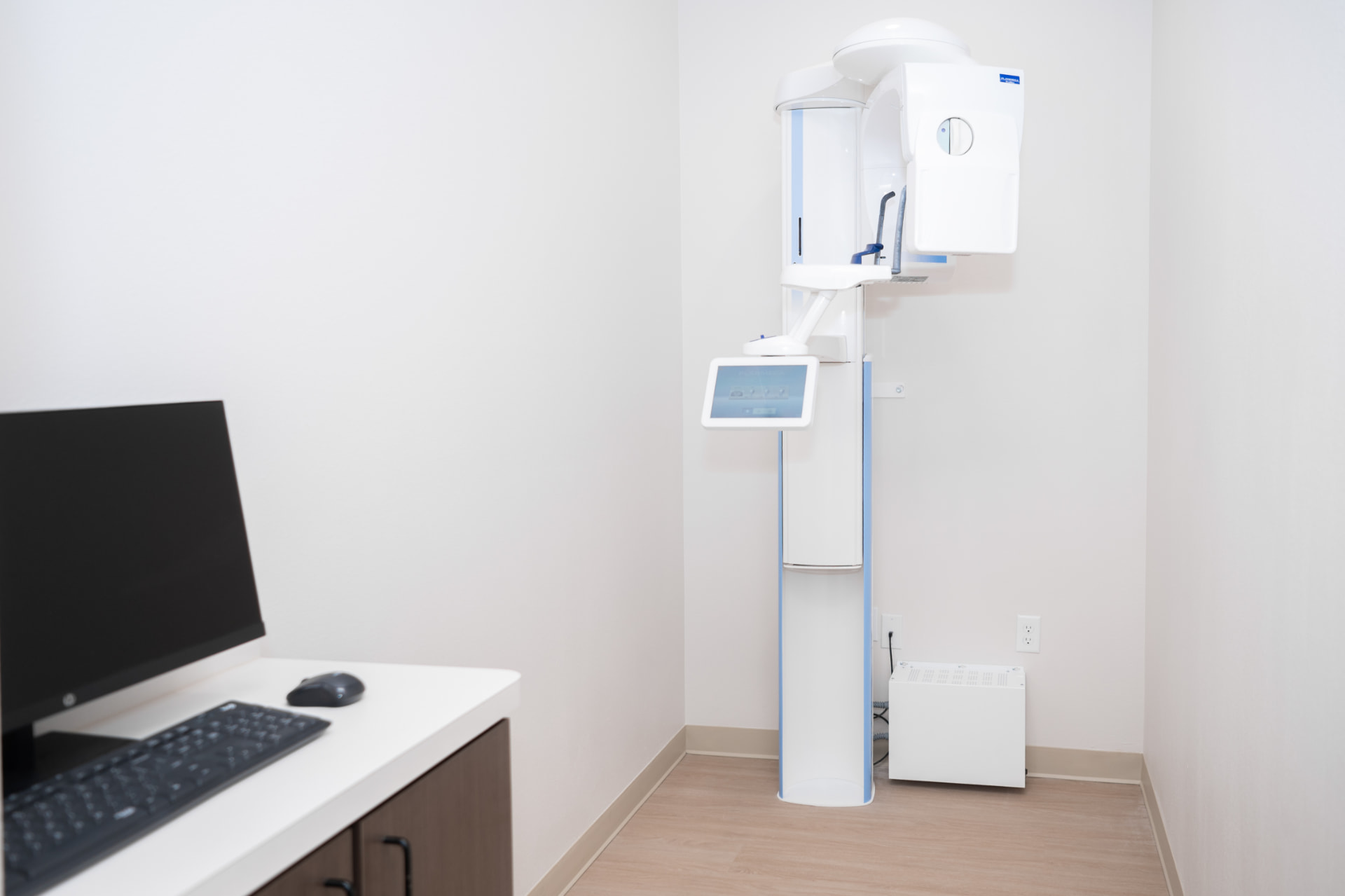
- 3D CBCT scans, intraoral scanning, and digital X-rays to measure bone loss
- Human-donated bone and a protective membrane placed in about 1 hour under local anesthesia
- Follow-up visits to confirm when you are ready for your implant
Call us to book your consultation.
Covenant Dental, 512 W Bonds Ranch Rd, Suite 100, Fort Worth, TX 76131